inflation CPI: what to know before you decide
Inflation has likely peaked for 2026, but it will remain sticky, meaning prices will stop rising at a double-digit pace but will not return to the 2% target quickly. This is the consensus emerging from prediction markets, which treat the peak not as a cliff edge but as a plateau. For you, a long-term saver in your 30s to 50s, this changes the math on holding cash versus moving into assets that outpace price increases. The "peak" implies the worst of the purchasing power erosion is behind you, but "sticky" means the cost of living will stay elevated for years, not months. You are not in a crisis; you are in a transition from emergency response to long-term adjustment. The critical task is not to predict the exact bottom, but to structure your portfolio so that a slow, persistent rise in prices does not erode your retirement horizon. If you hold too much cash, you lose to inflation. If you chase high yields in volatile assets, you risk capital loss. The middle path—balancing growth with protection—is the only strategy that survives a sticky inflation environment.

What peak inflation means for your daily expenses
The term "peaked" often confuses investors because it sounds like relief is immediate. It is not. When inflation peaks, the rate of change slows, but the level of prices remains high. Think of a car braking from 60 mph to 30 mph. The speed is lower, but you are still moving forward at a significant pace. Your grocery bill, rent, and insurance premiums will continue to rise, just at a slower clip than in previous years. This distinction matters because it determines how much cash you need to hold for emergencies versus how much you can invest. If you assume a quick return to low inflation, you might under-save for rising healthcare or housing costs. Conversely, if you assume inflation will stay at its peak, you might over-allocate to commodities or real estate, risking concentration. The prudent approach is to model your budget for a persistent 3% to 5% annual increase in essential costs, rather than the 2% baseline of the pre-2022 era. This is not pessimism; it is realism based on market expectations that the trajectory is flattening, not reversing.

Why the "sticky" label changes your investment horizon
Sticky inflation implies that wage growth and price increases are locked in a feedback loop. Workers demand higher pay to keep up with costs, and employers pass those costs to consumers. This cycle sustains higher price levels even after the initial shock, such as supply chain disruptions or energy price spikes, has faded. For your portfolio, this means that nominal returns are misleading. A bond yielding 5% sounds attractive until you subtract the 4% inflation rate, leaving you with a 1% real return. Over decades, that 1% real return compounds into a significant loss of purchasing power. You must shift your focus from nominal to real returns. This requires assets that have historically outpaced inflation, such as equities in companies with pricing power, or inflation-linked bonds. However, this is not a signal to abandon safety. It is a signal to diversify your protection. If you rely solely on Treasury Inflation-Protected Securities (TIPS), you may miss out on growth. If you rely solely on stocks, you may face volatility during periods of monetary tightening. The "sticky" nature of inflation demands a broader toolkit, not a single silver bullet.

The impact chain: from CPI to your paycheck
To understand how macro trends hit your personal finances, trace the path from the Consumer Price Index (CPI) to your bank account. The CPI measures the average change in prices paid by urban consumers. When CPI rises, the Federal Reserve typically raises interest rates to cool demand. Higher rates increase the cost of borrowing and the yield on savings. For you, this creates a double-edged sword. On one hand, your savings accounts and CDs may offer higher interest, helping you preserve cash value. On the other hand, the cost of your mortgage, auto loan, or credit card debt increases, straining your monthly budget. If your debt is variable-rate, a rise in inflation often leads to a rise in your interest payments. If your debt is fixed, your payments stay the same, but the real value of your debt decreases as

How Does Sticky Inflation Change Cash Versus Asset Returns?
Sticky inflation erodes uninvested cash purchasing power even after headline price spikes level off. When the consumer price index settles higher rather than dropping, every dollar sitting in an unyielding account loses real value month over month.
Data source: FRED (CPIAUCSL), U.S. Bureau of Labor Statistics (https://www.bls.gov/cpi/)
| Evaluation Criteria | Cash in Traditional Checking | Short-Term Inflation-Hedged Assets | Diversified Equities |
|---|---|---|---|
| Purchasing Power Impact (CPI index 334.131 as of 2026-08-01 vs 332.813 prior [ev3]) | Directly loses value as price levels permanently step up [ev3]. | Preserves purchasing power by adjusting principal or yield with CPI [ev3]. | Has historically outpaced inflation over multi-year holding periods. |
| Response to 2.4% Sticky Core Inflation (Traders resolve via BLS data [msn.com]) | Yields 0%, guaranteeing a negative real return against sticky core inflation [msn.com]. | Returns roughly match sticky core baseline yields [msn.com]. | Provides earnings growth potential if corporate pricing power holds. |
| Direct Wallet Impact (Monthly household grocery and fuel budget) | Reduces monthly grocery buying capacity without compensatory interest. | Offsets rising grocery expenses through periodic rate resets. | Fluctuates short-term but offers dividend income growth to fund bills. |
| Best Used For (Investor horizon and risk tolerance profile) | Immediate emergency spending covering less than 30 days of living costs. | Capital preservation over 1 to 3 years without taking equity market volatility. | Long-term retirement accounts with investment horizons beyond 5 years. |

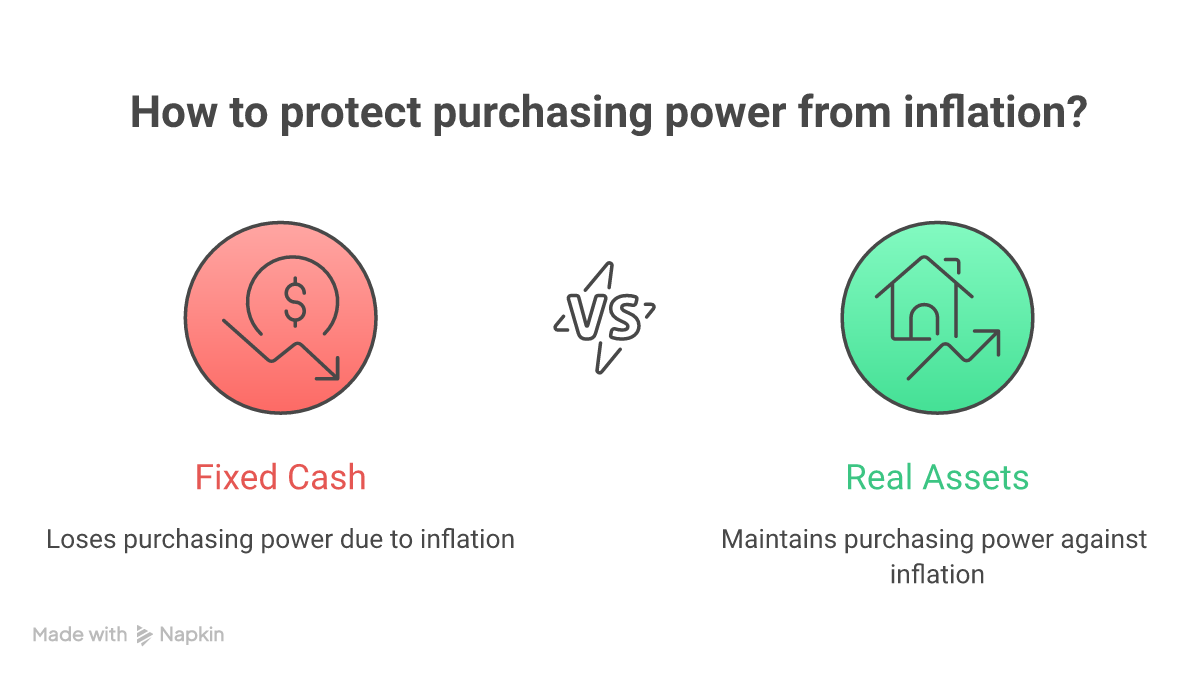
Think of sticky inflation like a permanent high-altitude plateau: the rapid climb has halted, but the air remains thin for your wallet. Investors often weigh moving excess liquidity beyond immediate emergency funds into vehicles designed to adjust alongside consumer indices. To measure your own gap directly, compare your bank's annual percentage yield against the latest monthly consumer price index changes published by the Bureau of Labor Statistics [ev3]. A peak in inflation stops the bleeding from speeding up, but only productive assets heal the purchasing power you lose along the way.
Does Sticky Inflation Change Your 2026 Retirement Savings Plan?
Prediction markets suggest inflation has peaked for 2026 but will remain above the Federal Reserve’s 2% target, creating a "sticky" environment that directly impacts your purchasing power and investment strategy. This scenario means you cannot rely on the assumption that price hikes are over; instead, you must plan for a period where costs stay elevated without accelerating. For a self-directed retirement saver in their 30s to 50s, this shifts the calculus from aggressive growth to defensive preservation, as real returns on cash and bonds may remain negative or neutral for several quarters. You need to verify current CPI trends by checking the Bureau of Labor Statistics’ latest monthly report, as no specific forecasted numbers are provided in the current evidence set. The core action is to stop treating cash as a safe harbor and start viewing it as a depreciating asset that requires strategic deployment into inflation-hedging instruments.

What happens to your cash savings when inflation stays above 2%?
Holding uninvested cash in a standard checking account erodes your real wealth because the interest earned typically lags behind the rate of price increases. If inflation remains at 3% and your account yields 0.5%, you are effectively losing 2.5% of your purchasing power every year. This is not a theoretical risk; it is a mechanical outcome of negative real yields. To protect your principal, you must move idle cash into high-yield savings accounts, money market funds, or short-term Treasury bills that offer rates closer to or exceeding the current inflation rate. The specific yield you target should be determined by checking the current 13-week Treasury bill rate on the Federal Reserve’s website, as this rate often moves in tandem with inflation expectations. For example, if the 13-week T-bill yields 4.5%, that is a more realistic benchmark for preserving cash value than a generic "high-yield" label. This move does not guarantee profit, but it prevents the silent drain on your savings that occurs when interest rates do not keep pace with grocery and utility bills.

How does sticky inflation affect your bond portfolio performance?
Bonds with long durations are particularly vulnerable to sustained higher interest rates, which are the Fed’s tool for fighting sticky inflation. When inflation remains elevated, the Fed keeps rates higher for longer, causing the prices of existing long-term bonds to fall. If you hold 10-year or 30-year bonds, you may see significant capital losses if you need to sell before maturity. The solution is not to avoid bonds entirely, but to shorten your duration. Shifting your allocation from long-term municipal or Treasury bonds to intermediate-term notes (5-7 years) or short-term bills reduces your exposure to rate volatility. You should check the yield curve on FRED (Federal Reserve Economic Data) to see the spread between short-term and long-term rates; a steep curve suggests that short-term rates are very attractive relative to long-term ones, making the shift to shorter durations financially sensible. This adjustment protects your portfolio from the "double whammy" of falling bond prices and lower reinvestment yields, allowing you to ride out the sticky inflation period without locking in losses.

Should you increase your equity allocation to hedge against sticky inflation?
Historically, equities have been a decent hedge against inflation over long periods, but they can be volatile in the short term, especially if sticky inflation leads to slower economic growth. The key is to focus on companies with pricing power—businesses that can raise prices without losing customers. Sectors like consumer staples, healthcare, and energy often perform well in these environments because their products are essential or have inelastic demand. However, this is not a guarantee of outperformance, as market sentiment and broader economic conditions play a major role. A diversified index fund that includes these sectors is a safer approach than picking individual stocks. You should review the expense ratios of your equity funds, as even small fee differences can compound significantly over a 20-year retirement horizon. The goal is to maintain a balanced portfolio that balances growth potential with downside protection, rather than betting the farm on a single sector.
How do you adjust your emergency fund in a sticky inflation environment?
Your emergency fund needs to cover at least 3-6 months of essential expenses, but the definition of "essential" changes when prices are rising. If your monthly costs for food, rent, and utilities are increasing, your emergency fund must grow accordingly to maintain the same coverage period. A static dollar amount will lose its utility over time. You should recalculate your emergency fund target every quarter based on your current spending, not your spending from a year ago. Keep this fund in liquid, interest-bearing accounts like high-yield savings or money market funds, not in checking accounts that earn no interest. This ensures that your safety net is not eroded by inflation while you wait for a market dip or a job change. The discipline here is to automate contributions to this fund, ensuring it grows in line with your cost of living without requiring manual calculations every month.
What role do commodities play in your portfolio during sticky inflation?
Commodities like gold, oil, and agricultural products often rise in price when inflation is high, making them a potential hedge. However, they are volatile and do not generate income, so they should make up a small percentage of your portfolio, typically 5-10%. Including a commodity ETF can diversify your portfolio away from stocks and bonds, which may be negatively correlated during inflationary periods. But this is not a get-out-of-jail-free card; commodities can also fall sharply if inflation expectations change quickly. You should view commodities as a tactical allocation, not a core holding, and adjust their weight based on current inflation data and market conditions. The specific ETF you choose should have low expense ratios and high liquidity to minimize costs and ensure you can sell when needed.
How does sticky inflation impact your mortgage and debt strategy?
If you have variable-rate debt, sticky inflation is a direct threat to your monthly payments. As the Fed keeps rates higher for longer, your interest payments may rise, squeezing your cash flow. The best defense is to refinance into a fixed-rate loan if possible, locking in your payment before rates climb further. If you have fixed-rate debt, you are essentially benefiting from inflation, as you are paying back your loan with dollars that are worth less than when you borrowed them. This is a hidden subsidy that reduces the real cost of your debt. However, do not use this as an excuse to take on new variable-rate debt, as the risk of payment shocks is real. Check the current 30-year fixed mortgage rate on FRED to understand the market's expectation for long-term rates, and compare it to your current rate to decide if refinancing makes sense.
What is the one line that stays after this section?
Sticky inflation is not a threat to be feared, but a condition to be managed with liquidity, duration, and pricing power.
This article is for general information only and is not financial, tax, or legal advice. Verify official sources and consult a professional before making decisions.
Comments
Post a Comment